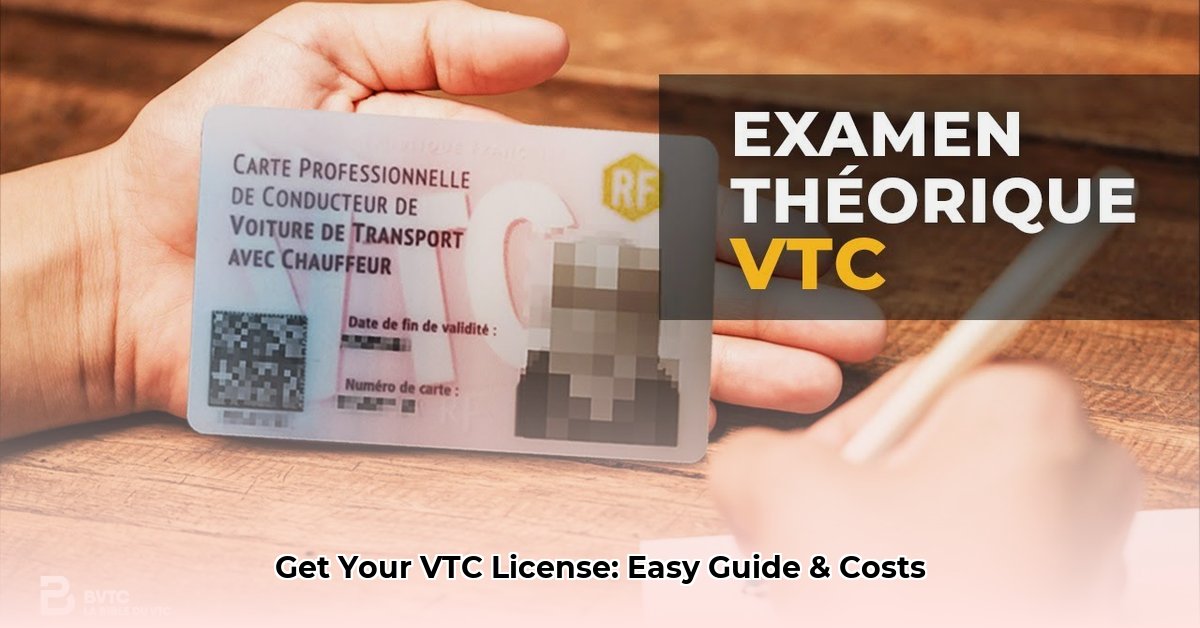
Obtaining a Carte VTC (private hire driver's license) in France can seem complex, but this guide breaks down the process into manageable steps. Whether you're aiming for a Carte VTC or need BVTC (vocational training) beforehand, we'll cover everything from eligibility to the final license, including a realistic cost breakdown.
Carte VTC BVTC: Your Ticket to Driving for Hire in France
Driving for hire in France requires a Carte VTC. This guide will help you navigate each step of the process, focusing on clarity and actionable advice.
Step-by-Step: Getting Your Carte VTC
This section provides a numbered, actionable plan for obtaining your license.
1. Eligibility Check: Meeting the Basic Requirements
Before you begin, ensure you meet these fundamental requirements:
- A clean driving record (no serious offenses).
- A valid driver's license held for at least three years.
- A current medical certificate confirming your fitness to drive. This certificate must meet French standards.
2. Training Decision: BVTC or Independent Study?
Choose between formal BVTC training or independent study. BVTC programs offer structured learning and potentially higher pass rates but are significantly more expensive. Independent study is cheaper but requires self-discipline and thorough preparation. Consider your learning style and budget when making this choice. Which option best suits your needs and learning style?
3. Mastering the Exams: Theory and Practical Driving
The theoretical exam tests your knowledge of French driving regulations and customer service. The practical exam assesses your driving skills on French roads. Thorough preparation is crucial for success in both. What resources will you use to effectively prepare for these crucial exams?
4. Document Compilation: Gathering the Necessary Paperwork
Meticulously gather all required documents:
- Valid driver's license.
- Medical certificate.
- Criminal background check.
- BVTC certificate (if applicable).
- Proof of identity and residence.
Any missing documents will significantly delay the process. Accuracy is paramount. How will you organize your documents to ensure nothing is missed?
5. Application Submission: Submitting to the Prefecture
Submit your completed application to the relevant prefecture (regional government office). Double-check for accuracy before submission. A complete and error-free application speeds up the process. Have you confirmed which prefecture handles applications in your region?
6. The Waiting Period: Patience and Proactive Communication
Processing times vary. Maintain regular contact with the prefecture and keep your contact information updated. What strategies will you employ to remain proactive during the waiting period?
7. License Acquisition: Receiving Your Carte VTC
Congratulations! Upon approval, you'll receive your Carte VTC, allowing you to operate as a private hire driver in France. What are your immediate plans after receiving your license?
The Costs: Budgeting for Your VTC License
Expect significant expenses. Factor in:
- BVTC Training (if applicable): Costs range from several hundred to several thousand euros. Consider this cost alongside the potential benefits of structured learning.
- Exam Fees: These fees contribute to the overall cost. Have you researched the exact cost of examination fees in your region?
- Medical Certificate: While relatively small, this is a necessary expense. Do you know the specific medical requirements for VTC license applicants?
- Vehicle Purchase/Lease: This is a substantial expense. This includes insurance and ongoing maintenance. What type of vehicle are you considering?
- Ongoing Expenses: Include fuel, insurance, maintenance, and potential platform fees. How have you planned for these regular expenses?
A detailed budget is crucial before starting the process.
BVTC vs. Independent Study: A Detailed Comparison
This table summarizes the key differences between these two training options:
| Feature | BVTC | Independent Study |
|---|---|---|
| Pass Rates | Generally Higher | Potentially Lower |
| Teacher Support | Extensive | Limited |
| Cost | Higher Initial Investment | Lower Initial Investment, Higher Risk |
| Flexibility | Structured Schedule | More Flexible Schedule |
| Learning Style | Instructor-Led, Structured Learning | Self-Directed |
Staying Informed: Staying Updated on French VTC Regulations
French VTC regulations are updated regularly. Monitor official government channels for changes (1). Staying informed is critical for compliance and long-term success. What resources will you use to keep up-to-date with regulatory changes?
How to Prove Prior Experience for French VTC License Equivalence
This section addresses proving prior professional driving experience to potentially shorten the required experience time.
Key Considerations:
This process hinges on meticulously documenting your prior driving history to meet the application’s specific requirements to demonstrate professional driving experience. What documentation will you need to prepare?
Step-by-Step Guide:
- Gather Records: Compile all relevant documents (employment contracts, payslips, tax returns, certifications, references).
- Translation/Certification: Obtain certified translations if necessary.
- Organize Evidence: Create a well-organized file showcasing your driving history chronologically.
- Submit Application: Submit your documents with your application highlighting your prior experience.
- Follow Up: Follow up as needed.
Types of Qualifying Experience:
- Taxi driving
- Chauffeuring
- Commercial delivery driving
- Bus driving
- Truck driving (depending on specifics)
Always refer to the official requirements for clarity.
Seeking Professional Assistance: Consider legal assistance for guidance and support with the application process.
Cost: Remember translation and potential legal fees.
This detailed guide empowers you to confidently navigate the process of obtaining your Carte VTC. Good luck!